
Designing Trust in Modern Aesthetic Medicine
A Future-Facing Digital Experience for Cosmetic Surgery
MYDNA established a future-facing digital experience for a cosmetic surgery clinic that communicates medical credibility, technological advancement, and patient trust. The project moved away from outdated cosmetic surgery websites that rely on stock imagery and promotional messaging. In their place, a refined digital interface presents aesthetic medicine as a disciplined, technologically advanced medical practice grounded in precision and professionalism.
Project Overview
The Client at a Glance
MYDNA is a conceptual cosmetic surgery clinic developed to explore how a modern aesthetic medical practice could present itself online. The project focuses on the intersection of advanced cosmetic procedures, medical expertise, and patient-centered communication through digital design.
At this stage, the concept represents an early brand exploring how a digital presence can establish credibility, communicate expertise, and build trust with prospective patients before consultation. The project provided an opportunity to reimagine how cosmetic surgery could be presented in a digital environment.
What makes MYDNA particularly interesting is its positioning. Rather than approaching cosmetic procedures through lifestyle marketing, the concept frames aesthetic medicine through the lens of precision, technology, and clinical discipline. This shift opens space for a more thoughtful and future-oriented design approach within the sector.

01
The Challenge
Many cosmetic surgery websites rely heavily on marketing language, before-and-after imagery, and familiar medical website templates. While these approaches may attract attention, they often fail to communicate the sophistication of modern aesthetic medicine.
Without a more considered approach, the risk is that a clinic appears promotional rather than clinical. When patients are making deeply personal medical decisions, credibility and reassurance are essential.
This challenge often appears in real-world clinics as a tension between aesthetics and authority. Some websites lean too far toward sterile medical design and appear cold or impersonal. Others lean toward glamour and marketing aesthetics that can weaken trust. In both cases, patients are left uncertain about the professionalism and expertise behind the service.
02
The Insight
Patients approaching cosmetic procedures are not simply purchasing a service. They are making a deeply personal medical decision that requires clarity, confidence, and trust.
The challenge therefore extended beyond visual style. What was missing in many examples across the sector was a digital environment capable of communicating discipline, precision, and medical credibility while still feeling contemporary and aspirational.
For the project to succeed, the website needed to feel calm, precise, and technologically advanced. The experience had to communicate expertise without persuasion and allow professionalism to emerge through structure, clarity, and restraint.
03
The Strategy
The core strategic decision was to position MYDNA as a future-oriented medical clinic where cosmetic procedures are presented as advanced clinical treatments supported by technology and expertise.
Equally important was the decision to avoid common cosmetic surgery marketing clichés. Exaggerated glamour photography, aggressive promotional messaging, and decorative design elements were deliberately excluded. These elements often prioritise spectacle rather than clarity and can undermine the perception of medical credibility.
Success needed to feel calm, controlled, and credible. Visitors should sense precision and professionalism rather than persuasion.
From Insight to Execution
Selected Work
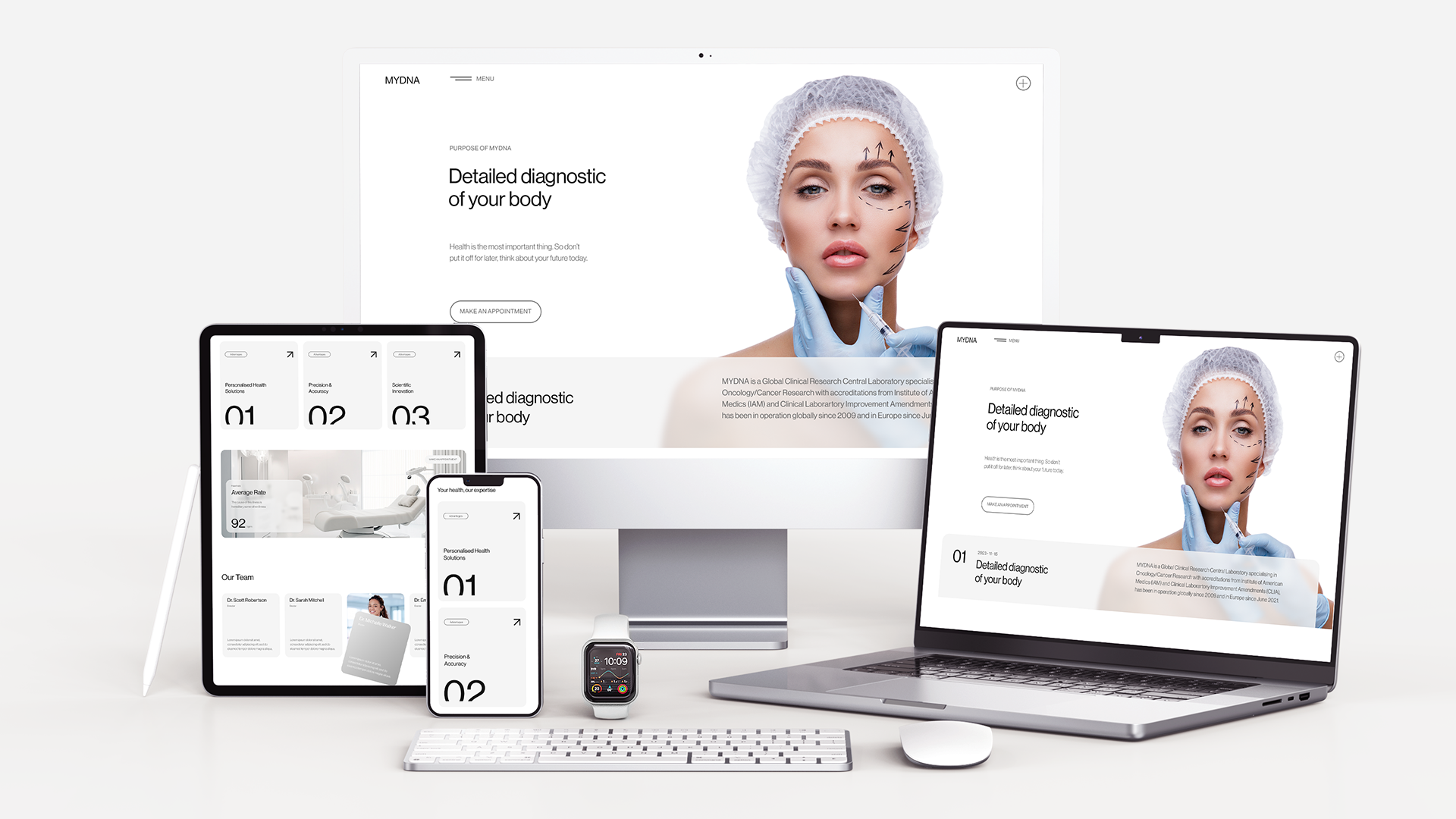
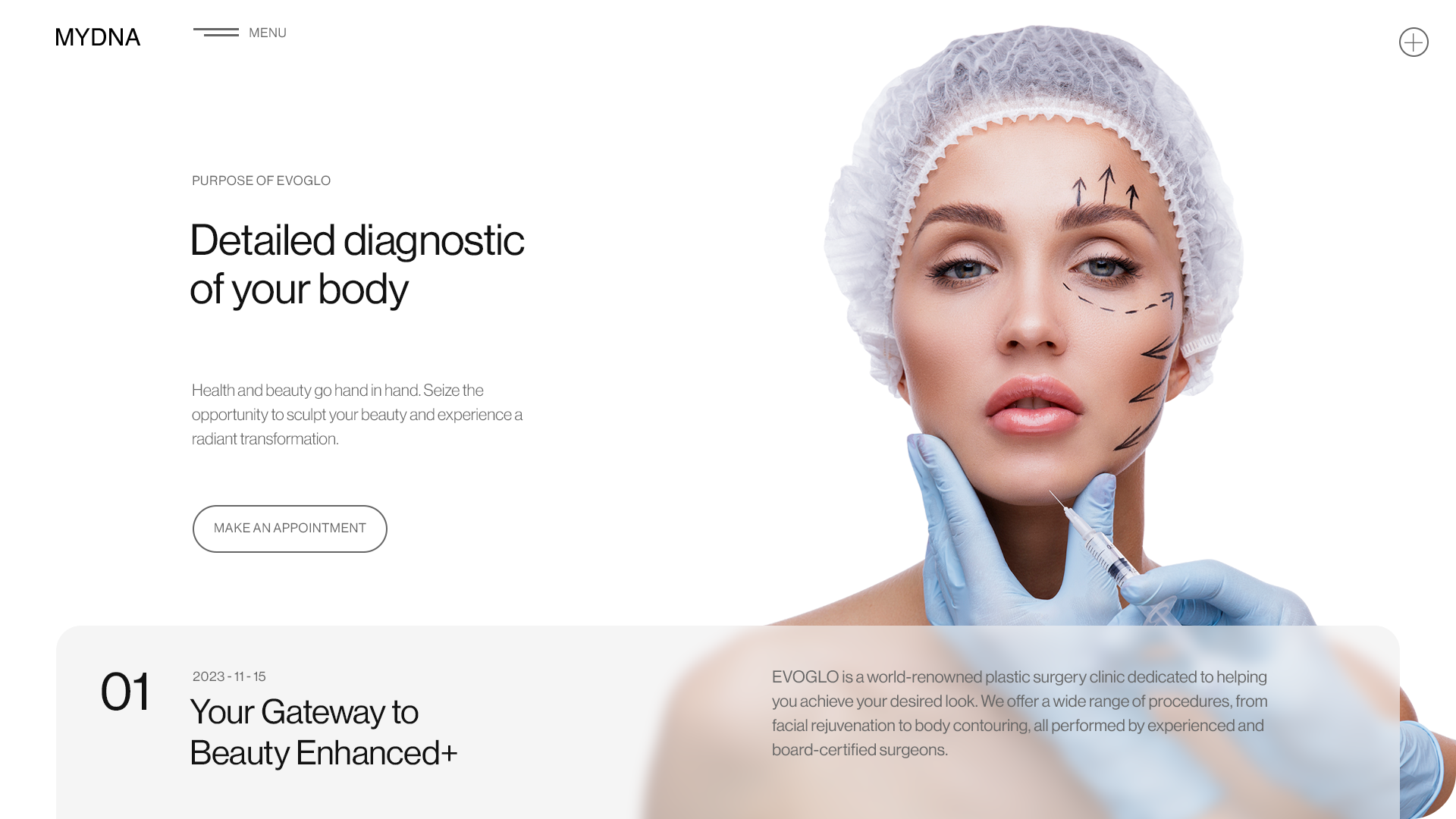
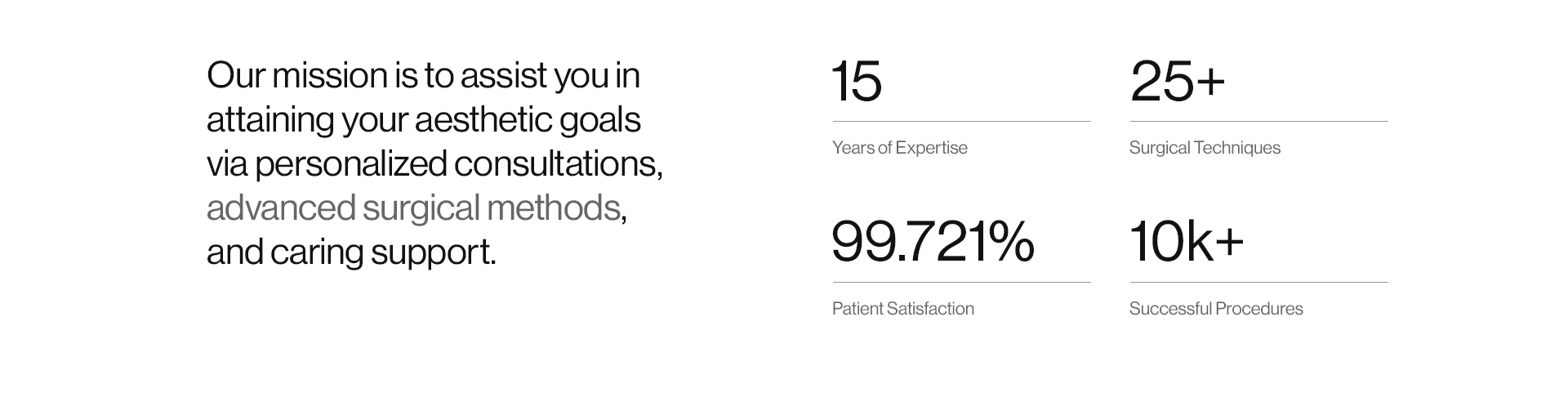
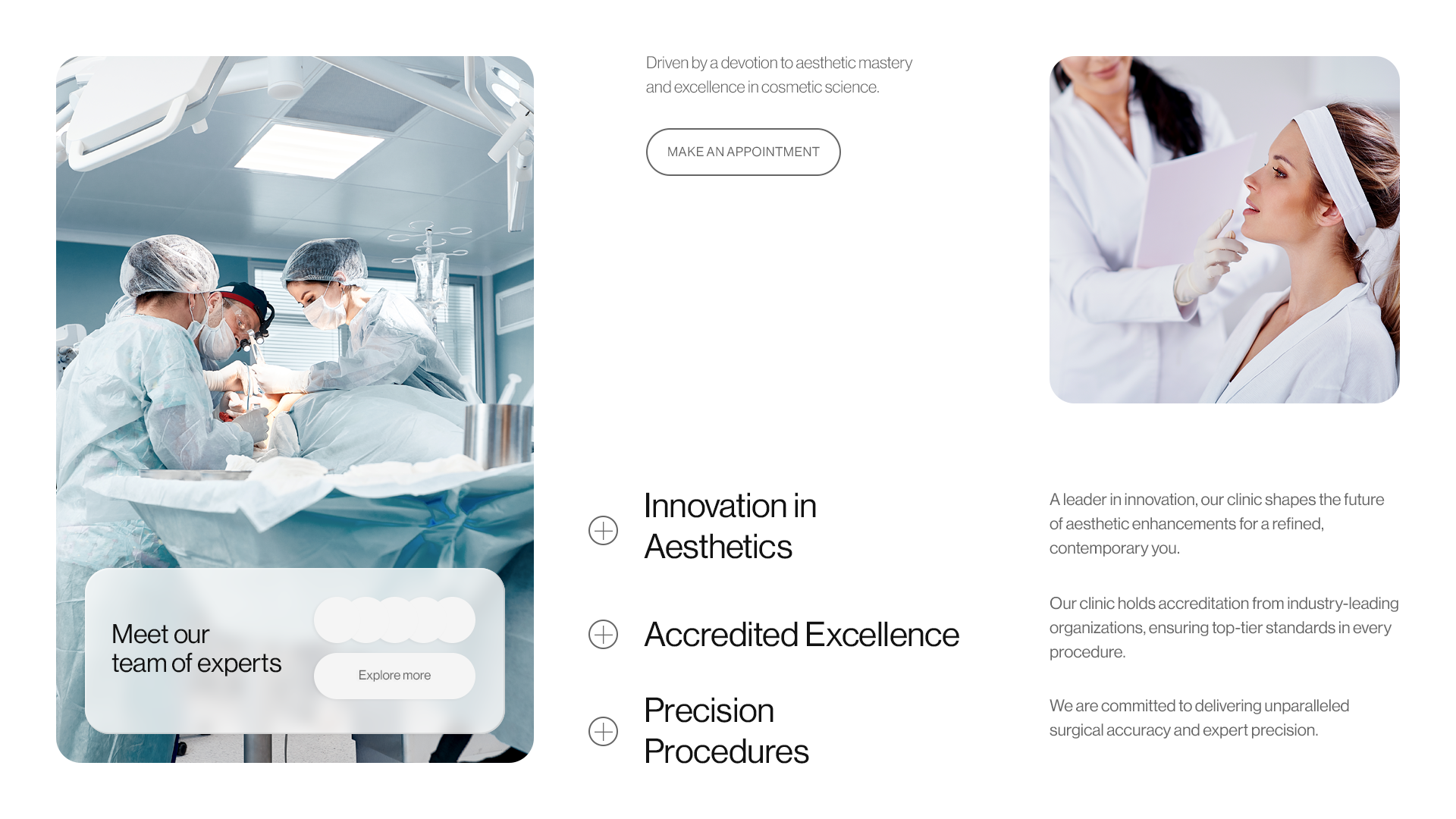
Translate Strategy Into Form
Creative Intelligence
Visual system overview
01
The brand is perceived as modern, precise, and medically credible while maintaining a sense of aesthetic refinement. The presence communicates quiet authority, technological confidence, and a calm visual environment that supports patient trust.
Key design decisions and rationale
02
More traditional cosmetic surgery aesthetics were explored during early design stages. Glossy beauty imagery and promotional layout styles were considered but ultimately rejected. These approaches shifted the emphasis toward marketing rather than medical expertise.
Instead, the project committed to a restrained and minimal interface built around typography, spatial structure, and controlled imagery. This direction allows the clinic's professionalism and technological positioning to define the experience rather than decorative design.
Tone, typography, color, imagery, motion, etc.
03
The restrained visual language removes unnecessary visual noise and allows the clinic’s expertise to take center stage. Visitors encounter a calm and structured environment that communicates professionalism through clarity and order.
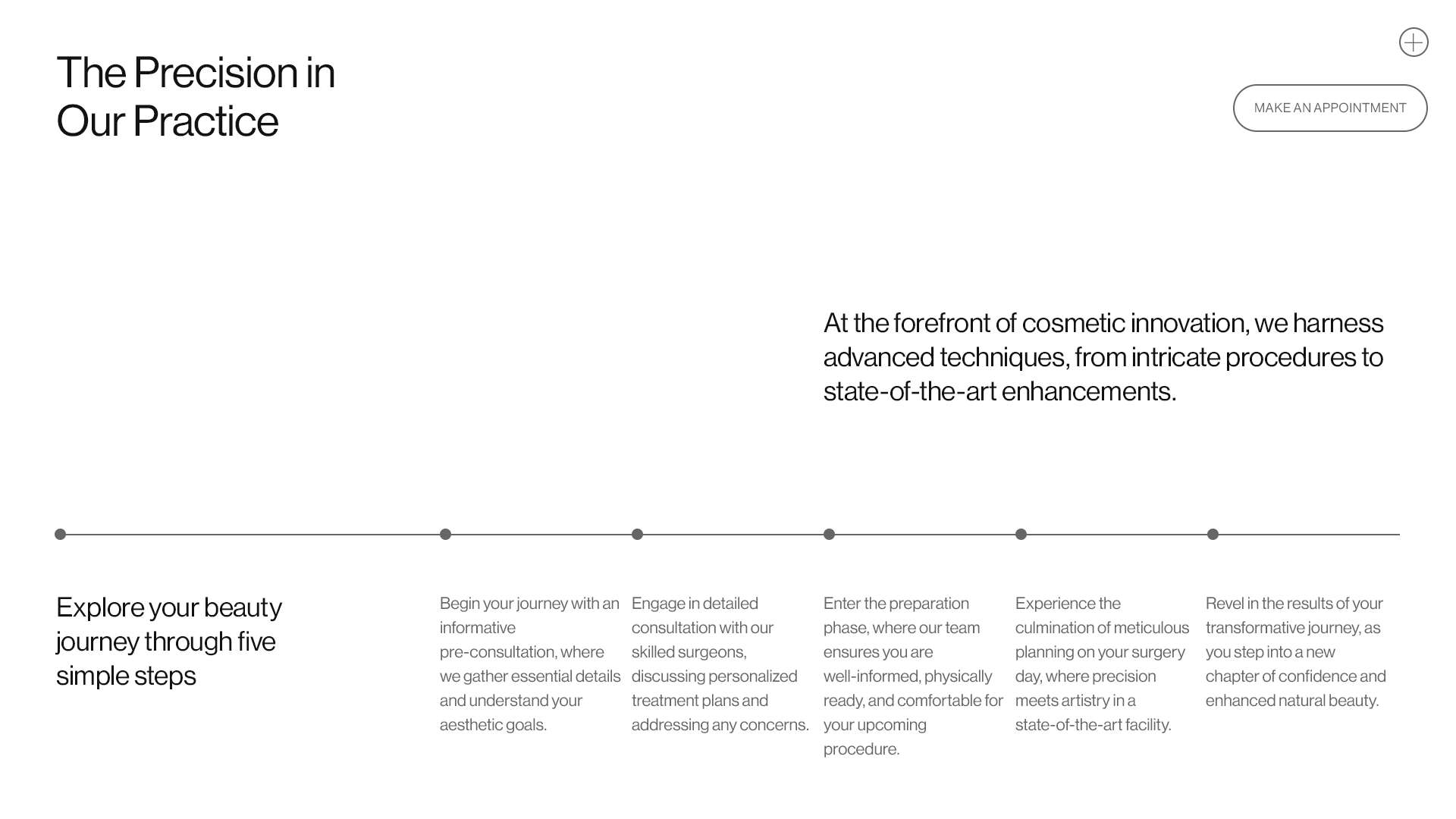
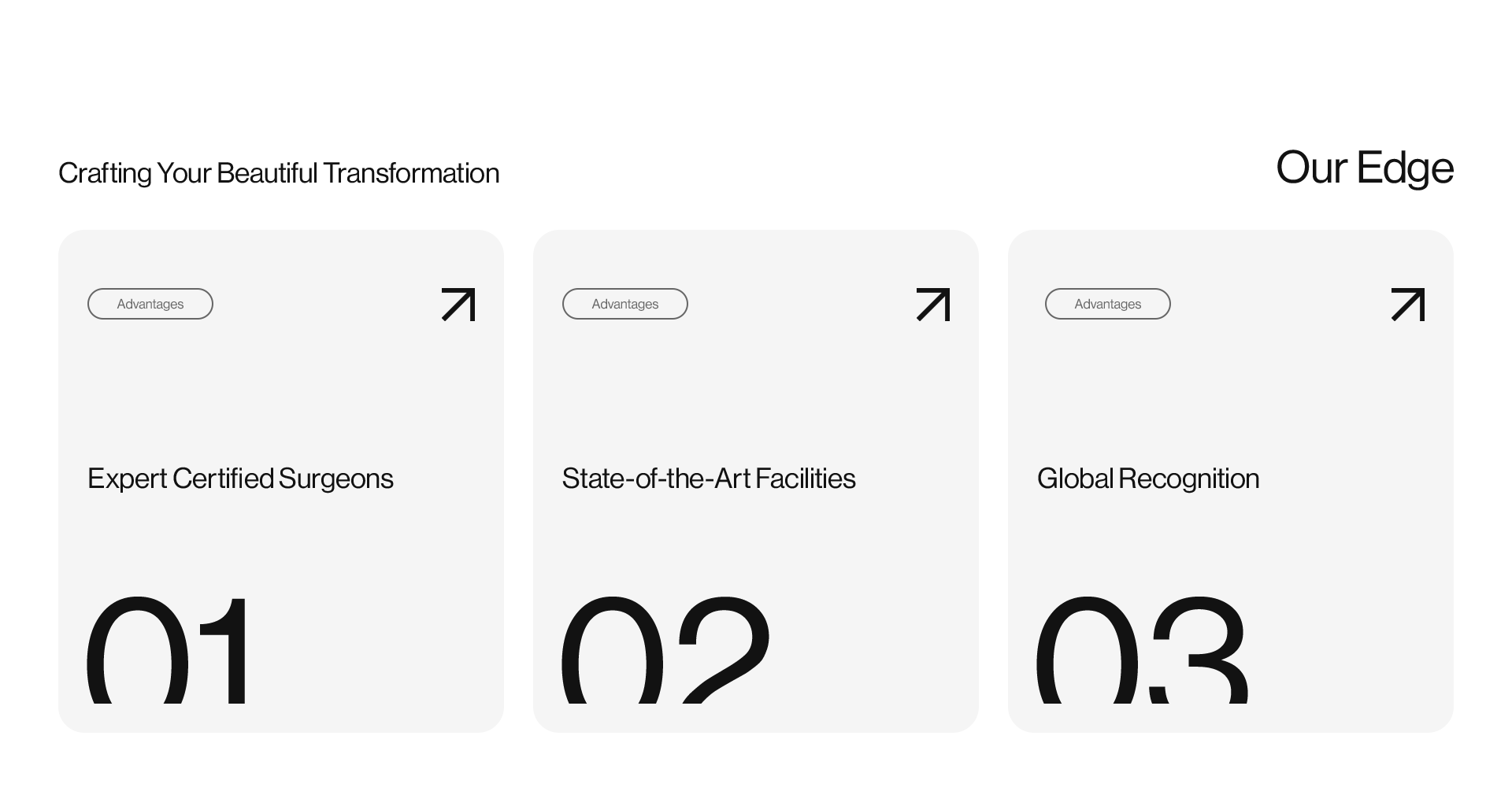
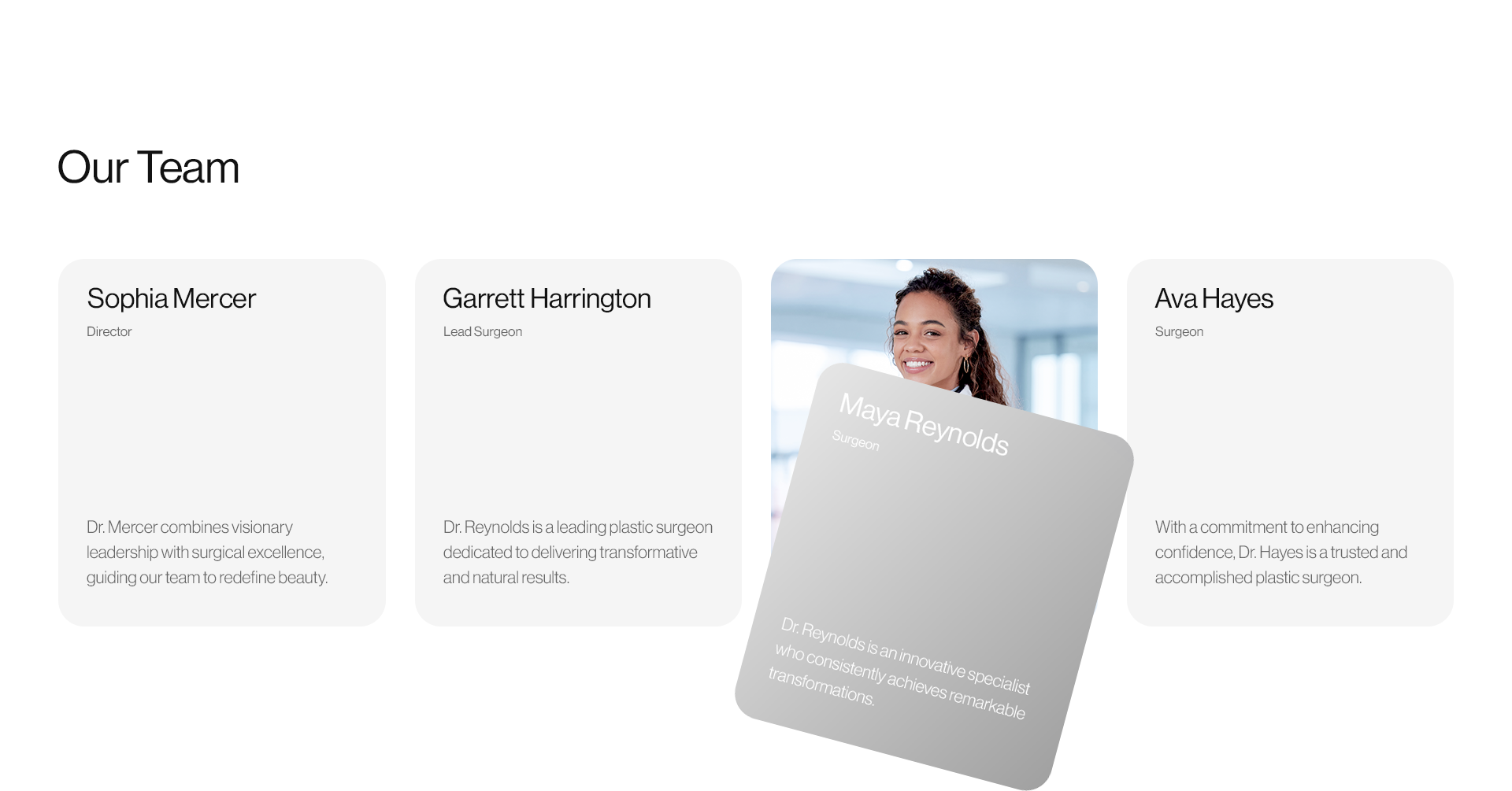
Strategy and execution meet most clearly in the layout itself. The interface prioritises patient understanding, calm navigation, and structured information. This reinforces the perception of a disciplined medical environment where expertise and technology guide the experience.
How the execution supports the strategy
04
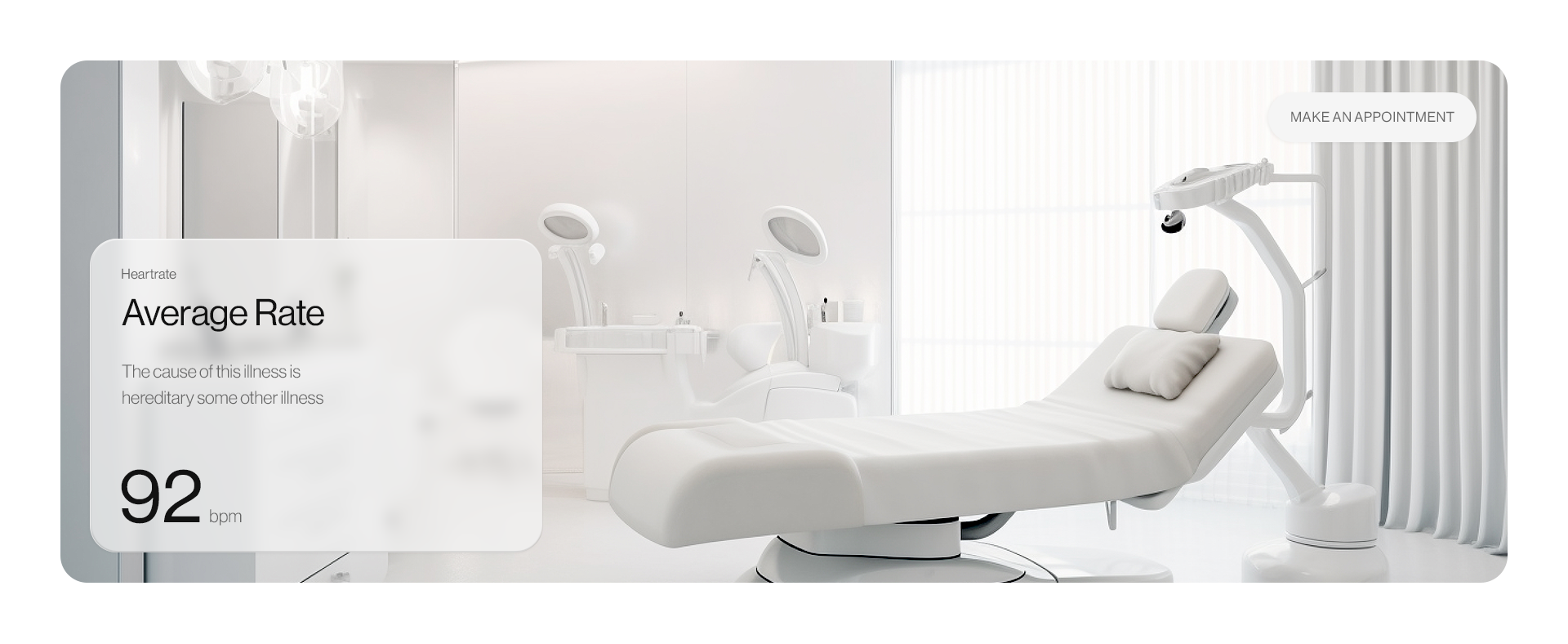
The visual language is clean, minimal, and forward-looking without feeling cold, prioritising clarity through generous spacing and a precise typographic hierarchy. The system is guided by clinical restraint, ensuring visual elements support professionalism rather than decoration, while typography structures the interface through deliberate scale, weight, and spacing. A controlled palette of neutral tones reinforces calm authority and technological precision, and a structured grid maintains consistent alignment, rhythm, and readability across the interface.
Design Impact
The Outcome
The project demonstrates how a cosmetic surgery clinic can communicate credibility and innovation through thoughtful interface design. The resulting digital experience presents the clinic as technologically advanced, trustworthy, and patient-focused.
One of the most notable outcomes was the shift in perception created by restraint. Rather than relying on aggressive marketing aesthetics, the interface elevates the clinic through calm authority and clarity.
In the short term, the project establishes a clear blueprint for how aesthetic medical brands can present themselves online with sophistication and professionalism.
In the long term, the concept provides a scalable digital foundation that could support patient education, consultation booking, and integration with future medical technologies.
What Our Clients Think
Testimonials
-
![]()
★★★★★
They understood the heritage and symbolism I wanted to preserve, and translated that into a brand that feels elevated, authentic, and enduring.
—Aiste, GIJA LT
-
![]()
★★★★★
They took time to understand what my business is really about—security, trust, and professionalism—and built a brand around that. No fluff, just clean, sharp work that actually helps me stand out.
—Dan, Ambervalley Locksmiths
-
![]()
★★★★★
Dawn Media was the first design agency that didn’t try to simplify or water down my mission. They genuinely cared about the preservation of these beautiful creatures.
—Dora, Fox Guardians
-
![]()
★★★★★
The work was meticulous—everything clean, realistic, and on-brand. Turnarounds were fast, and communication was clear throughout. They deliver consistently and makes our lives easier.
—Ryder, Unsworth Sugden
-
![]()
★★★★★
The look they created is smart but not flashy, and it feels solid—like us. It’s helped us look more professional without losing that family-run feel people trust us for.
—Paul, Superior Stoves
-
![]()
★★★★★
Dawn Media was lovely to work with, they really listened, asked the right questions, and somehow turned all my scattered ideas into something beautiful and cohesive.
—Jodie, Jodie's Bakehouse
-
![]()
★★★★★
The visuals are sharp, bold, and full of movement—and they reflect my style as a coach. It gave me a huge confidence boost, and clients are responding to it.
—Maria, Maria Marikiya PT
-
![]()
★★★★★
Dawn Media has a remarkable way of translating abstract ideas into practical, elegant design. Their team helped me define AnGlophone Go’s unique position and brought clarity to how we communicate that—visually and online.
—Elena, AnGlophone Go
-
![]()
★★★★★
Building the Real English brand with Dawn Media was a game-changer. They helped me refine not just how we look, but how we show up in the world—on social media, on our site, and in how we speak to our audience.
—Charlotte, The Real English Center







Anchor The Narrative
Key Takeaway / Thesis
Design within medical environments must prioritise trust, clarity, and professionalism before visual expression. When those foundations are strong, aesthetic sophistication becomes a natural extension of credibility rather than a substitute for it.
Future projects will continue to prioritise restraint, structure, and typographic clarity over decorative visual choices. With a fully implemented product, the next phase would expand the system through interactive elements, patient education tools, and deeper user experience testing to support patient confidence throughout the decision-making process.
The Phoenix Rises
Awaken Your Brand
You’ve seen how we think. You’ve felt the difference in our approach. Now, the path forward is clear. If you’re ready to transform your brand into a force that leads, resonates, and endures. Carpe diem, seize the day.
Let’s begin your digital transformation.